In-house or outsourced hotel laundry: the real numbers
What washing in-house really costs a small hotel: staff hours, energy, breakdowns and the August peak. An honest comparison and when outsourcing pays off.
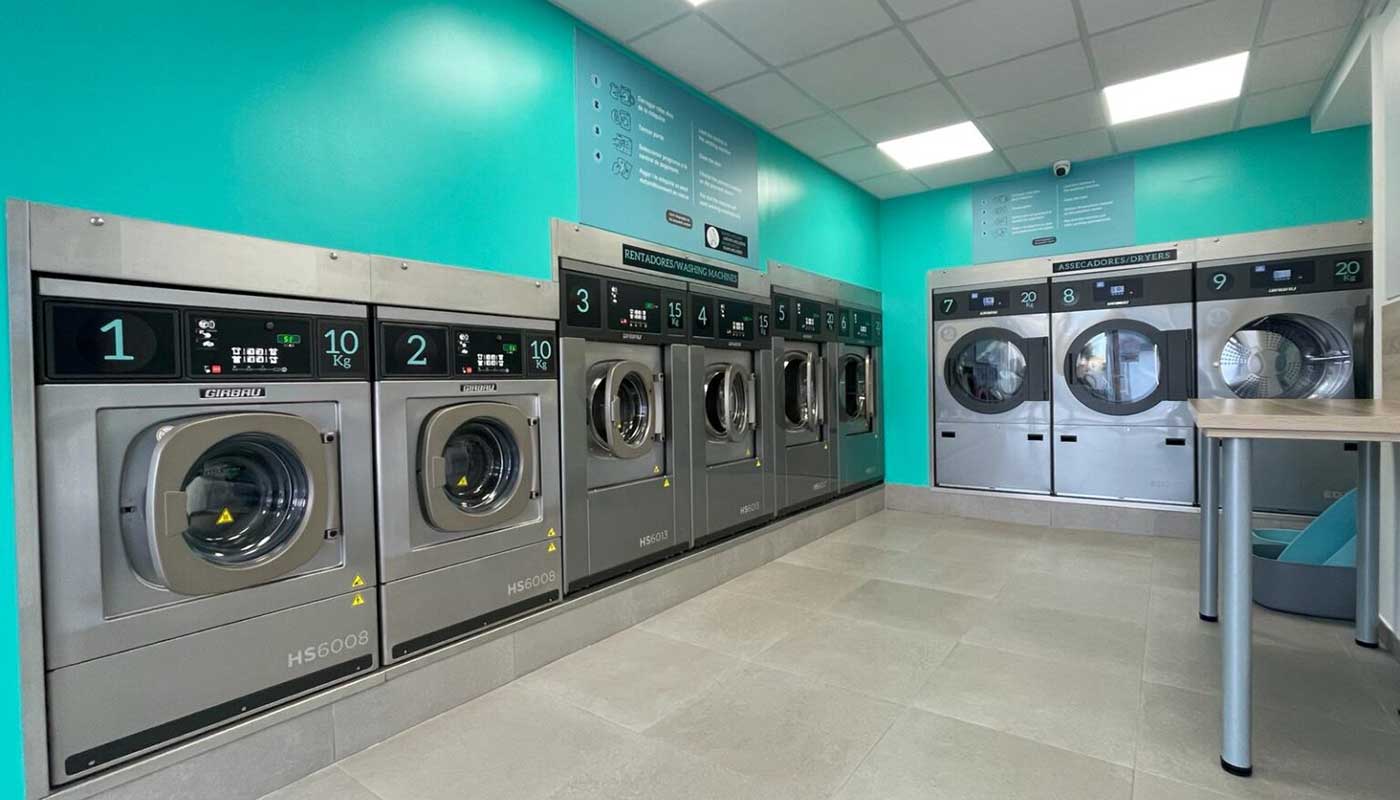
If you run a hotel with 10 to 60 rooms on the Costa Brava, you know this conversation: do we keep washing in-house or send it out? The trouble is that the decision usually gets made at the worst possible moment, in the middle of August, with the washing machine on its last legs and the sheets nowhere near ready for the 3 pm check-ins. The right time to run the numbers is now, in low season, calmly and with last summer’s data still fresh.
The hidden costs of washing in-house
When a hotel works out what its laundry costs, it usually adds up detergent, a bit of electricity and not much else. The costs that really weigh are different ones, and almost nobody writes them down:
- Staff hours. Washing, drying, ironing and folding the linen of 20 occupied rooms easily eats 3 to 5 hours of work every day. At the real cost to the business (salary plus social security), that is several hundred euros a month that never appear on any invoice with the word “laundry” on it, but they exist.
- Energy and water. Hotel bed linen is washed at 60 °C for hygiene, and the tumble dryer is one of the hungriest appliances in the whole building. Running daily from May to October, it shows on the bill.
- Breakdowns and machine lifespan. A domestic washing machine is designed for 4 or 5 cycles a week, not a day. At hotel pace it lasts two or three seasons, and the breakdown always comes in July, when the technician takes longer and the linen will not wait.
- The space. The laundry room, the drying rack, the shelves of half-folded linen: square metres that could be a proper storeroom, a staff room or storage that actually keeps the hotel tidy.
- The August peak. With the hotel full and same-day check-outs and check-ins, housekeeping cannot cover it all. Either you pay overtime, or you lower the ironing standard, or both at once.
In-house or outsourced: an honest comparison
| In-house laundry | Outsourced | |
|---|---|---|
| Cost | Looks cheap, but adds up staff hours, energy, water and breakdowns | Predictable rate per kilo or per piece; the market tends to range between 1 and 2 € per kilo of flatwork, depending on volume and area |
| Control | Total: you set timings and priorities | You depend on the provider; offset it by agreeing turnaround times in writing |
| Seasonal peaks | Your machines and staff are what they are: you pay for the peak | Industrial capacity is sized for August; the provider absorbs the peak |
| Ironing quality | Hard to match a roller iron with a domestic one | Professional, consistent finish, wash after wash |
| Upfront investment | High if you want decent semi-industrial equipment (several thousand euros) | Zero on machinery |
The short answer? It depends on your volume. Below a certain number of kilos a week, washing in-house can pay off. From mid occupancy in season onwards, the numbers usually tip towards outsourcing, especially once you count staff hours at their real cost.
When keeping it in-house does make sense
Let’s be honest, because outsourcing is not always the right call:
- Very low, stable volume. A guesthouse with 8 or 10 rooms open all year, with steady occupancy and no sharp peaks, can absorb the washing without breaking a sweat.
- Staff with genuinely idle hours. If your housekeeping team has real gaps in the day (not theoretical ones), using them for laundry makes sense.
- Machinery already paid off. If you invested in semi-industrial equipment years ago and have space to spare, the marginal cost of carrying on is low.
And there is a middle road many properties take: outsource the flatwork (sheets and covers, which demand the most ironing time) and keep towels and small items in-house.
What to ask a provider before you sign
Any laundry will treat you wonderfully in February. What you really want to know is something else:
- What is the real turnaround in August? Not the usual one, the one for the worst week of the year. Ask for it in the agreement.
- What happens if a batch goes wrong? A stain that will not come out, a torn sheet: who replaces it, how fast and at whose expense.
- Do they offer linen rental, yes or no? Even if you do not want it today, it says a lot about their service capacity.
- How often do they collect and deliver? Fixed route or on demand, which days they pass through your area and whether there is a minimum per pickup.
And a low-season tip: ask for a trial month. January and February are perfect for testing a provider with nothing at stake.
Linen rental: the other half of the equation
Buying textiles for a hotel is not cheap: the usual recommendation is at least two or three sets per bed, plus yearly replacement for wear, stains and losses. That is capital sitting idle in a cupboard.
With rental, the linen belongs to the provider: you pay for the use, and they handle replacing whatever wears out. You always have enough sets, in August too, and the quality stays constant because replacement is continuous. The honest caveat? Over the long run you pay for that service, and if you want very specific, personalised textiles you may prefer to buy them. Rental shines when you do not want to tie up capital or manage replacements.
How we do it at Safareig+
Here is what we actually do, no hot air. With Safareig+ we work with hotels and holiday apartments in the area, with pickup and delivery by route: L’Escala, Torroella de Montgrí and l’Estartit, Roses, Empuriabrava, Sant Pere Pescador and the rest of the Empordà. The usual turnaround is 24 hours, delivery is free from 20 kg, and we offer bed linen and towel rental if you would rather not buy textiles. You can see how we work and our self-service prices; for the hotel service we quote case by case, because it depends on your volume and your turnover.
Want to run the numbers for your own hotel? Message us on WhatsApp at +34 621 121 486 and we will prepare a no-obligation quote. And if it is low season, even better: it is the perfect time to try us out without pressure.